
Sick bed
The day shivers and tomorrow I will change its sheets.

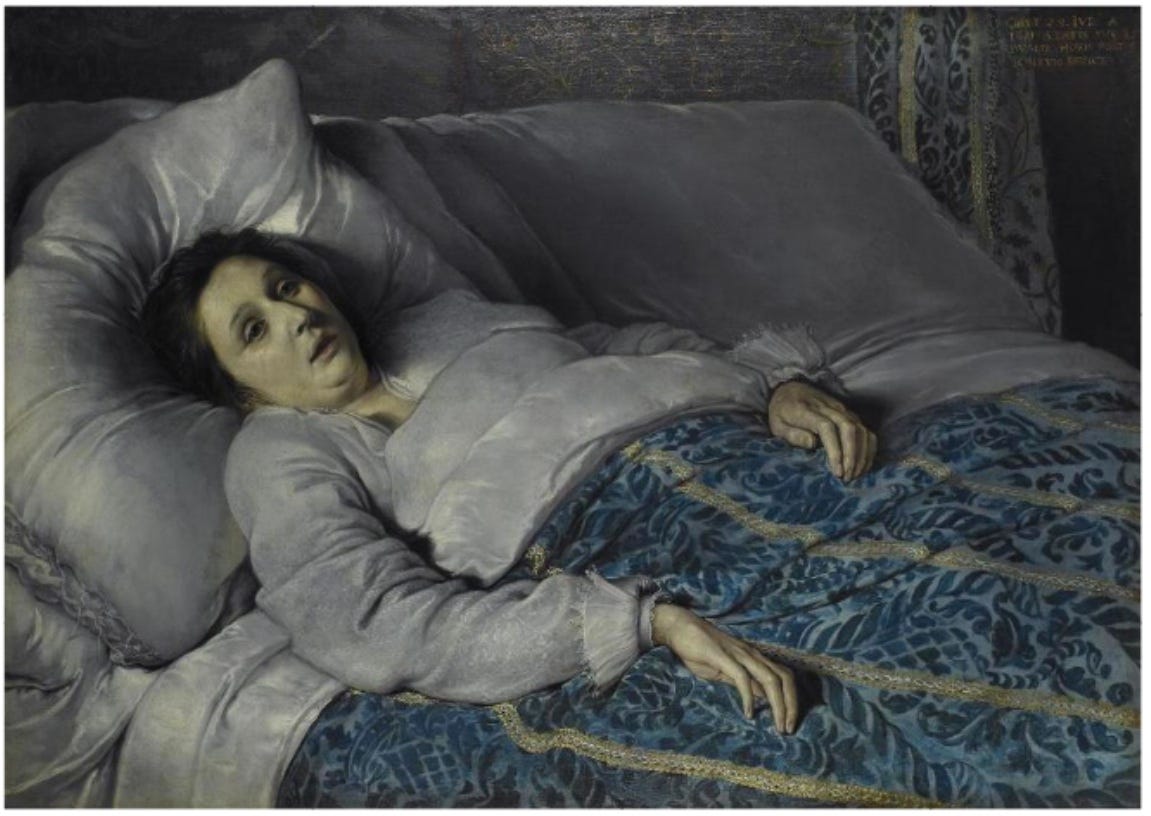
I am in my sick bed again, which means I can’t think or write or read or edit. I call it a ‘sick bed’ now, which is strange because it had a different name before, though the object hasn’t changed: ‘Sometimes I think there is no more tragic piece of furniture than a bed, how quickly it falls from the place you fuck to the place you waste away in’, writes Anne Boyer.
In which case my low, floating futon has had many forms: the one which held me last night as I slept; the one which held me while I cried; the one which groaned in protest as I jumped his bones; the one which refused to break while I recovered from major surgery.
After my body broke, I needed something firm, like an Ikea mattress.
It is lonely to be unwell. Such isolation has encouraged me to read poetry again and other forms of literature I have neglected over the years. In this miserable condition I tend to their words like wounds, perhaps because I have the time. Perhaps because poetry is just another symptom of the sick body.
I think of Sylvia Plath:
“The tulips are too red in the first place, they hurt me”
And, Anne Sexton:
“Although there are chairs
I lie on the floor.”
A bed I lay on once was called a surgical table. A table is less kind than a bed. A table believes its surface is not for a body. A table has knives and other tools. When a bed becomes hard enough it needs a new name. I thought there were angels all around.
When Boyer was ill, she tended to the words of John Donne, who came close to death in 1623. While in his sickbed, he wrote ‘Devotions upon Emergent Occasions’: “Miserable, and (though common to all) inhuman posture, where I must practise lying in the grave by lying still, and not practice my resurrection by rising any more.”
Donne believed sickness was a visit from God: a “loving scourge” which invites us to examine hidden sins and moral failures. Donne’s bed was an altar.
The day shivers and tomorrow I will change its sheets.